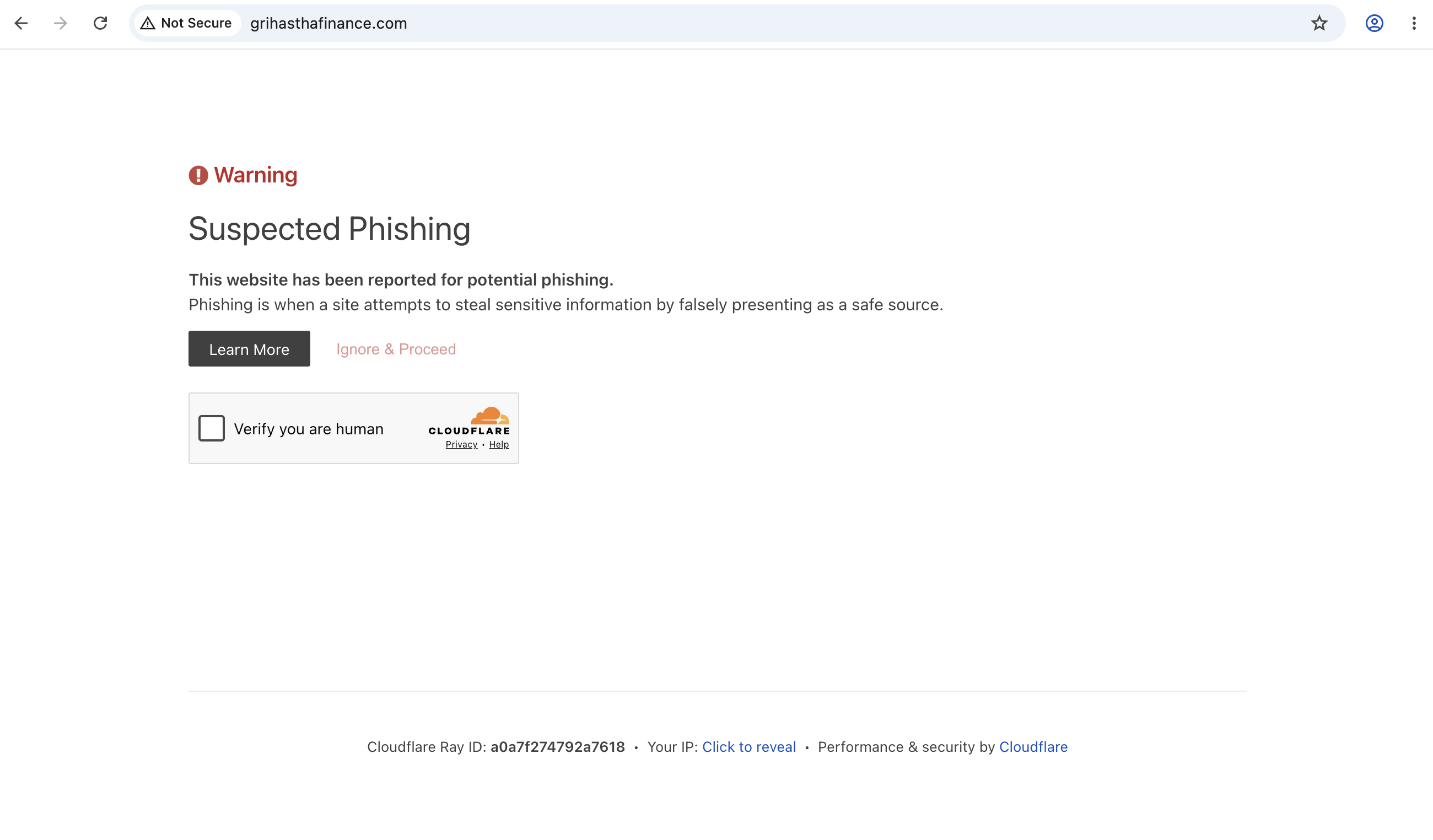
grihasthafinance.com Review: Transparency Audit.
Introduction
When evaluating any online financial platform, appearance should never outweigh verification. Professional branding, polished interfaces, and broad claims about investment opportunities do not automatically translate into regulatory legitimacy or investor safety. From a compliance standpoint, the primary objective is to determine whether a platform demonstrates adequate transparency, clear ownership structures, appropriate regulatory oversight, and meaningful investor protection mechanisms.
This review examines grihasthafinance.com, which currently presents itself under the name MBB Finance, offering access to trading activities involving stocks, gold, and cryptocurrencies. Rather than assessing the platform from a profitability perspective, this analysis focuses on whether the information publicly available supports the level of trust that investors should expect from a financial services provider.
The review addresses five essential areas:
- Due diligence considerations;
- Transparency standards;
- Regulatory status and oversight;
- Ownership disclosure;
- Investor protection practices.
The goal is educational: helping investors understand how compliance professionals assess financial platforms before committing funds.
Understanding the Platform
According to information published on the website, MBB Finance positions itself as a multi-asset trading platform that provides access to equities, precious metals, and digital assets. The website highlights features such as real-time charts, alerts, risk-management tools, and streamlined user experiences designed for both novice and experienced traders.
From a marketing perspective, these claims are common across many online investment platforms. However, compliance analysts rarely evaluate a business based on its promotional language. Instead, they seek answers to fundamental questions:
- Who owns the platform?
- Which regulatory authority supervises it?
- Under what legal entity does it operate?
- What protections exist if disputes arise?
- Can investors independently verify the company’s claims?
These questions form the foundation of proper due diligence.
Due Diligence: The First Line of Defense
Due diligence involves independently verifying information rather than relying exclusively on a company’s own statements.
When reviewing grihasthafinance.com, several aspects warrant closer examination.
Domain History
One factor often reviewed is domain age. Reports indicate that the domain has existed since 2010, suggesting a relatively long registration history.
While longevity can sometimes support credibility, it should never be interpreted as proof of legitimacy. Domains may change ownership, business models, or operational structures over time. Investors should therefore investigate whether the current services offered align with the domain’s historical usage.
Verification of Corporate Identity
Effective due diligence requires confirming that the legal entity operating a platform matches the information displayed on its website.
Independent sources have linked the domain to Grihastha Finance Limited, a company incorporated in India decades ago.
However, the website prominently markets itself as MBB Finance. When platforms operate under trade names that differ from their registered corporate identities, investors should seek additional clarification.
Questions worth asking include:
- Is MBB Finance a registered business name?
- What is the relationship between MBB Finance and Grihastha Finance Limited?
- Which entity signs customer agreements?
- Which jurisdiction governs disputes?
The absence of clear answers can complicate legal recourse.
Transparency Assessment
Transparency is a cornerstone of financial compliance.
Legitimate financial institutions generally disclose:
- their full legal name;
- registration number;
- regulatory license details;
- corporate headquarters;
- executive leadership;
- terms and conditions;
- risk disclosures.
The more transparent an institution is, the easier it becomes for prospective clients to verify its legitimacy independently.
Corporate Information
A review of publicly accessible information suggests that investors may need to conduct additional investigation to establish a complete picture of the organization’s current structure.
Transparency gaps can emerge when:
- legal entities are referenced inconsistently;
- jurisdictional information is unclear;
- ownership disclosures are limited;
- licensing details cannot be readily verified.
From a compliance perspective, these factors do not automatically indicate wrongdoing. However, they increase uncertainty and elevate the importance of enhanced due diligence.
Risk Disclosures
Financial platforms that facilitate trading activities should provide prominent disclosures regarding:
- market volatility;
- potential capital losses;
- leverage risks;
- cryptocurrency-specific risks;
- suitability considerations.
Responsible financial firms avoid portraying trading as a guaranteed path to wealth. Instead, they emphasize that losses are possible and that investment decisions should align with an individual’s risk tolerance.
Investors should carefully review whether these disclosures are sufficiently detailed and easily accessible.
Regulatory Considerations
Regulation remains one of the most important indicators of accountability.
Regulatory oversight establishes standards relating to:
- capital adequacy;
- operational conduct;
- complaint handling;
- reporting obligations;
- anti-money laundering controls.
Without regulatory supervision, investors may have fewer protections if disputes occur.
Why Regulation Matters
Regulators serve several important functions.
They may require firms to:
- maintain minimum financial resources;
- segregate client assets;
- submit to audits;
- implement compliance programs;
- disclose material risks;
- cooperate with investigations.
The absence of such oversight can increase operational risk.
Questions Investors Should Ask
Before depositing funds with any platform, investors should independently confirm:
- Which regulator supervises the company?
- What license number has been issued?
- Is the license currently active?
- Does the regulator’s database list the firm?
- Are the services offered consistent with the license obtained?
These checks should be performed using official regulatory sources rather than relying solely on information displayed on the platform itself.
Conflicting Information
Some independent commentators have raised concerns regarding historical regulatory issues associated with entities connected to the Grihastha name. One report alleged that an earlier certificate of registration had been cancelled by Indian authorities.
However, investors should exercise caution when interpreting third-party allegations and should verify such claims directly through official regulatory databases whenever possible.
Compliance analysts avoid reaching definitive conclusions based exclusively on secondary reporting.
Instead, the presence of conflicting information typically results in a recommendation for enhanced due diligence.
Ownership and Beneficial Control
Understanding who ultimately controls a financial platform is essential.
Ownership transparency helps investors determine:
- who is accountable for business decisions;
- whether conflicts of interest may exist;
- where legal responsibility resides.
Why Ownership Disclosure Matters
Opaque ownership structures can create several challenges.
If problems arise, investors may struggle to determine:
- whom to contact;
- which jurisdiction applies;
- which entity holds responsibility.
Clear ownership disclosures help establish trust.
Evaluating Grihasthafinance.com
Available information indicates connections between the domain and Grihastha Finance Limited.
At the same time, the operational branding emphasizes MBB Finance.
This distinction highlights an important compliance principle:
Brand identity should not replace legal identity.
Investors deserve clarity regarding:
- the operating entity;
- the beneficial owners;
- the management team;
- the jurisdiction of incorporation.
Without this information, informed decision-making becomes more difficult.
Investor Protection Analysis
Investor protection mechanisms distinguish regulated institutions from less accountable alternatives.
These safeguards are designed to reduce harm when problems occur.
Segregation of Client Funds
One common protection involves separating customer assets from company operating funds.
This practice helps ensure that client money is not improperly used for business expenses.
Investors should determine whether such arrangements exist and whether they are independently verified.
Complaint Resolution Procedures
Legitimate firms typically publish formal complaint procedures outlining:
- how grievances may be submitted;
- expected response timelines;
- escalation options;
- access to external dispute-resolution mechanisms.
The availability of structured complaint processes contributes to accountability.
Educational Resources
Investor protection also involves education.
Responsible platforms encourage users to understand:
- trading risks;
- diversification principles;
- capital preservation strategies;
- emotional decision-making pitfalls.
Educational content should emphasize informed participation rather than unrealistic expectations.
Fraud Prevention Measures
Security controls may include:
- multi-factor authentication;
- account monitoring;
- identity verification;
- suspicious activity detection.
Although cybersecurity protections are valuable, they should not be confused with regulatory safeguards.
A secure website does not automatically indicate that a financial service is appropriately supervised.
Red Flags Compliance Analysts Monitor
Regardless of the specific platform under review, compliance professionals often investigate the following warning signs:
Limited Regulatory Disclosure
A lack of easily verifiable licensing information deserves further scrutiny.
Inconsistent Corporate Identity
Multiple business names without clear explanations may complicate accountability.
Difficulty Verifying Leadership
Transparency regarding directors and executives is generally preferable.
Overemphasis on Marketing
Promotional claims should be balanced with meaningful risk disclosures.
Jurisdictional Complexity
Cross-border structures can make dispute resolution more challenging.
The presence of one factor alone may not indicate misconduct. However, multiple concerns occurring simultaneously justify heightened caution.
Best Practices for Prospective Investors
Individuals considering any online investment platform should adopt a structured approach.
Verify Before Depositing
Search official regulatory databases.
Do not rely exclusively on testimonials or website content.
Request Documentation
Ask for:
- license details;
- client agreements;
- fee schedules;
- withdrawal policies.
Transparent firms should be prepared to provide this information.
Start Conservatively
If proceeding, avoid committing substantial amounts until operational reliability has been demonstrated.
Maintain Records
Retain copies of:
- communications;
- account statements;
- transaction confirmations;
- promotional materials.
Documentation can prove valuable if disputes arise.
Seek Independent Advice
Complex investment decisions may warrant consultation with licensed professionals.
Final Assessment
From a compliance perspective, grihasthafinance.com presents a mixed picture.
On one hand, the platform promotes features commonly associated with modern trading environments and benefits from an established domain history. Independent technical reviews have not identified significant malware concerns.
On the other hand, several factors justify careful investigation before any financial commitment is made.
These include:
- the distinction between the MBB Finance brand and Grihastha Finance Limited;
- the need for independently verifiable regulatory information;
- questions surrounding ownership transparency;
- the importance of confirming investor protection arrangements.
None of these considerations automatically establish illegitimacy. However, they underscore the importance of rigorous due diligence.
Ultimately, investors should remember that trust in financial services should be earned through transparency, accountability, and verifiable compliance—not through marketing language alone.
The most effective investor protection strategy remains unchanged:
Verify first, invest second.
Financial opportunities may come and go, but safeguarding capital begins with asking the right questions before funds ever leave your account.
-
Contact Bridgereclaim.com to Review Your Case
If you have lost money to grihasthafinance.com, it is important to act without delay. You can submit details of your experience to BRIDGERECLAIM.COM, a platform that assists individuals who have been affected by fraudulent online trading activity. Taking prompt action may improve the likelihood of addressing the situation and pursuing accountability for those responsible.
Unregulated brokers such as grihasthafinance.com continue to target unsuspecting investors. Staying informed, avoiding platforms that lack proper oversight, and alerting the appropriate channels can help protect both yourself and others from financial misconduct.