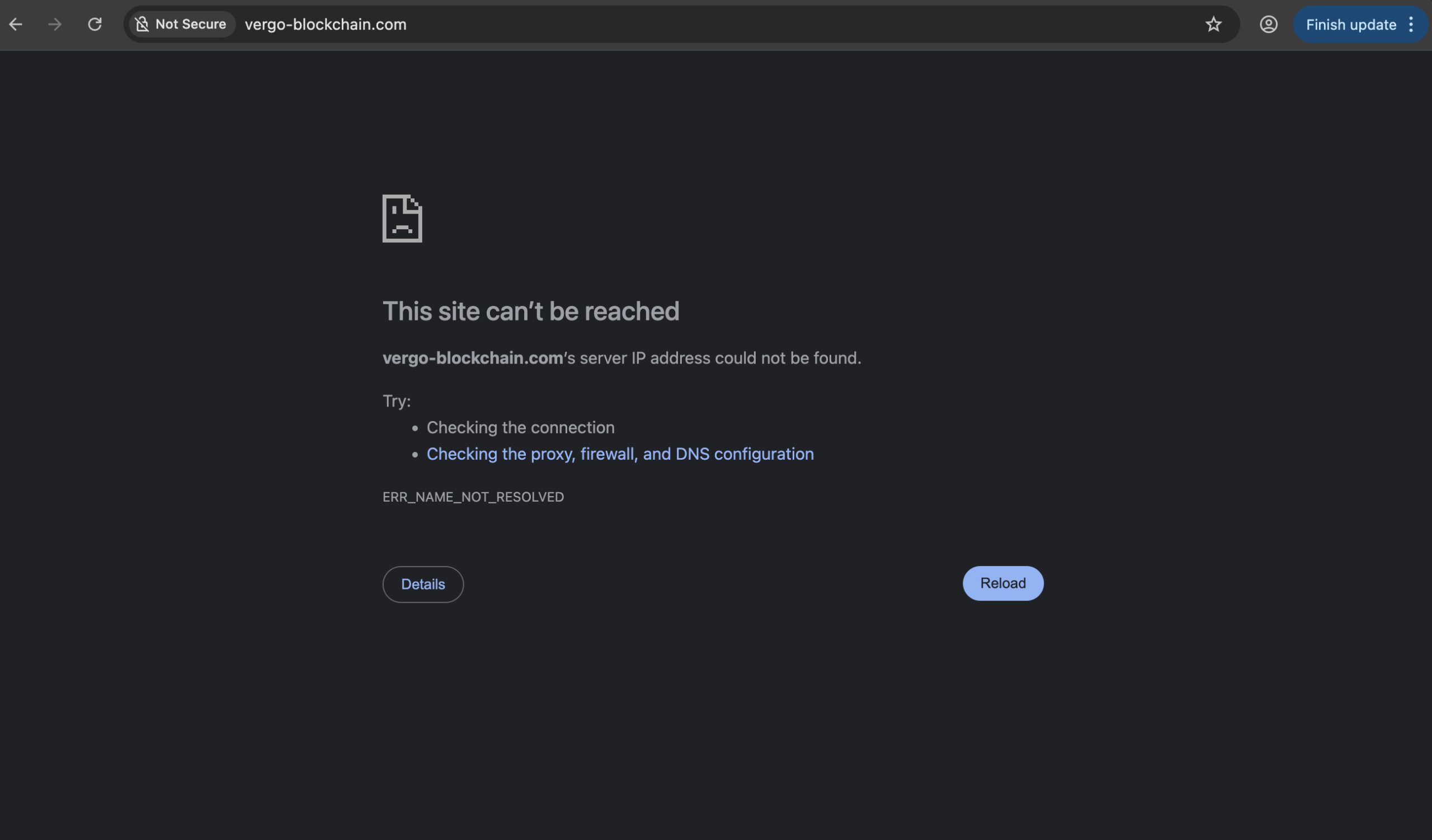
Vergo-blockchain.com Review: Inside The Platform
vergo-blockchain.com appears to lean heavily on that perception. At first glance, it presents itself as a modern, technology-driven investment solution. But when you strip away the branding and examine what actually exists beneath the surface, a very different picture begins to emerge.
This review takes an analytical, deconstruction-style approach—peeling back each layer of the platform to understand what it really offers, and more importantly, what it fails to provide.
Layer One: The Branding Strategy
The name itself—“Vergo Blockchain”—is carefully chosen.
- “Blockchain” implies decentralization and transparency
- “Vergo” sounds like a tech-forward or financial brand
- Combined, they create an impression of innovation and trust
However, branding alone does not equal functionality.
A key question immediately arises:
Does the platform actually demonstrate any real blockchain integration?
In many cases like this, the answer is unclear. The website may reference blockchain technology in general terms, but fails to provide:
- Technical documentation
- Public ledger access
- Smart contract details
- Verifiable on-chain activity
Without these elements, the use of “blockchain” becomes more of a marketing tool than a functional reality.
Layer Two: The Investment Narrative
Vergo-blockchain.com appears to position itself as an investment platform offering users the ability to grow their funds through advanced strategies.
The messaging typically emphasizes:
- Automated systems
- Expert-level trading
- Consistent returns
- Minimal user effort
This narrative is intentionally appealing. It targets users who want exposure to digital assets without needing deep technical knowledge.
But there is a fundamental issue:
The platform does not clearly explain how these returns are generated.
Legitimate investment services usually provide:
- Strategy breakdowns
- Risk disclosures
- Performance metrics
In contrast, this platform relies on generalized claims that cannot be independently verified.
Layer Three: The User Interface Experience
A well-designed interface is often one of the strongest tools for building trust—and Vergo-blockchain.com appears to use this effectively.
Typical features may include:
- Clean dashboards
- Real-time balance displays
- Visual profit tracking
- Structured investment plans
These elements create the impression of an active and functioning system.
However, it is important to understand that visual data does not necessarily reflect real financial activity.
Without transparency or external verification, the numbers displayed on a dashboard could simply be:
- Pre-programmed values
- Simulated growth figures
- Internal representations with no real market connection
This is a critical distinction that many users overlook.
Layer Four: Transparency Gaps
One of the most telling aspects of any financial platform is how transparent it is about its operations.
In the case of Vergo-blockchain.com, several key transparency gaps stand out.
No Clear Company Identity
There is little to no verifiable information about:
- The company behind the platform
- Its legal registration
- Its leadership team
This lack of identity makes it impossible to determine who is responsible for managing user funds.
No Regulatory Framework
Financial platforms that handle investments are typically subject to regulation. This ensures:
- Consumer protection
- Operational accountability
- Legal compliance
Vergo-blockchain.com does not provide clear evidence of being regulated by any recognized authority.
This absence significantly increases the level of uncertainty for users.
No Independent Verification
There are no third-party audits, certifications, or performance reports available to validate the platform’s claims.
In a space where trust is critical, this lack of verification is a major concern.
Layer Five: Behavioral Indicators
Beyond structure and presentation, the way a platform behaves can reveal a great deal.
Vergo-blockchain.com exhibits several behavioral patterns commonly associated with high-risk platforms.
Encouragement of Continuous Deposits
Users may be prompted to:
- Increase their investment levels
- Upgrade to higher-tier plans
- Take advantage of limited-time offers
This creates a cycle where users are encouraged to commit more funds over time.
Lack of Clear Exit Path
While depositing funds is straightforward, withdrawing them may not be as simple.
Potential issues can include:
- Processing delays
- Additional requirements
- Communication challenges
Even the possibility of these barriers is enough to warrant caution.
Overreliance on Simplified Messaging
The platform tends to present investing as:
- Easy
- Fast
- Predictable
This oversimplification is misleading. Real financial markets are complex and involve significant risk.
Layer Six: Technical Considerations
From a technical standpoint, several factors further contribute to the platform’s risk profile.
Domain Characteristics
Platforms with limited history or newly registered domains lack:
- Established reputation
- Long-term user feedback
- Proven reliability
This makes it difficult to assess their credibility.
Hosting Environment
Some platforms operate within networks of similar websites, often sharing infrastructure.
This can indicate:
- Template-based deployment
- Short-term operational intent
- Rapid replication under different names
While not always visible to users, this pattern is common in unreliable platforms.
Basic Security Features
The presence of SSL encryption is often highlighted as a security measure.
While important, it is also standard. It does not:
- Verify legitimacy
- Guarantee safe operations
- Protect against fraudulent practices
It simply ensures that data transmission is encrypted.
Layer Seven: The Bigger Picture
When all these layers are combined, a consistent pattern begins to emerge.
- Strong branding with limited substance
- Promising investment narrative without evidence
- Polished interface lacking transparency
- Behavioral cues encouraging deeper financial commitment
- Structural gaps in identity and regulation
Individually, these issues might raise questions. Together, they form a clear and concerning profile.
Why This Matters for Investors
The primary risk with platforms like Vergo-blockchain.com is not just financial loss—it is the illusion of legitimacy.
Users may believe they are participating in a sophisticated investment system when, in reality:
- There is no verifiable trading activity
- Returns may not be genuine
- Accountability is absent
This disconnect between perception and reality is what makes such platforms particularly dangerous.
Final Thoughts
Vergo-blockchain.com presents itself as a forward-thinking, blockchain-powered investment platform. But a closer examination reveals that its strengths are largely superficial.
The absence of transparency, regulation, and verifiable operations outweighs any positive impressions created by its design or messaging.
In the world of online investing, trust must be earned through clarity, accountability, and evidence—not just presentation.
Conclusion
After carefully analyzing its structure, behavior, and underlying characteristics, Vergo-blockchain.com raises multiple concerns that cannot be overlooked.
It is not enough for a platform to look professional or use advanced terminology. What matters is whether it can support its claims with verifiable facts.
In this case, the gaps are too significant to ignore.
Avoiding Vergo-blockchain.com is the most prudent decision for anyone seeking a secure and transparent investment environment.
-
Contact Bridgereclaim.com to Review Your Case
If you have lost money to vergo-blockchain.com, it is important to act without delay. You can submit details of your experience to BRIDGERECLAIM.COM, a platform that assists individuals who have been affected by fraudulent online trading activity. Taking prompt action may improve the likelihood of addressing the situation and pursuing accountability for those responsible.
Unregulated brokers such as vergo-blockchain.com continue to target unsuspecting investors. Staying informed, avoiding platforms that lack proper oversight, and alerting the appropriate channels can help protect both yourself and others from financial misconduct.