Blueware-Nexus.org Essential Investor Guide
The online investment industry continues to attract individuals looking for opportunities in forex, cryptocurrency, CFDs, and other financial markets. While legitimate investment firms operate under established regulatory frameworks and maintain transparent business practices, countless websites emerge each year that provide little information about who operates them, how client funds are protected, or whether they are legally authorized to offer financial services.
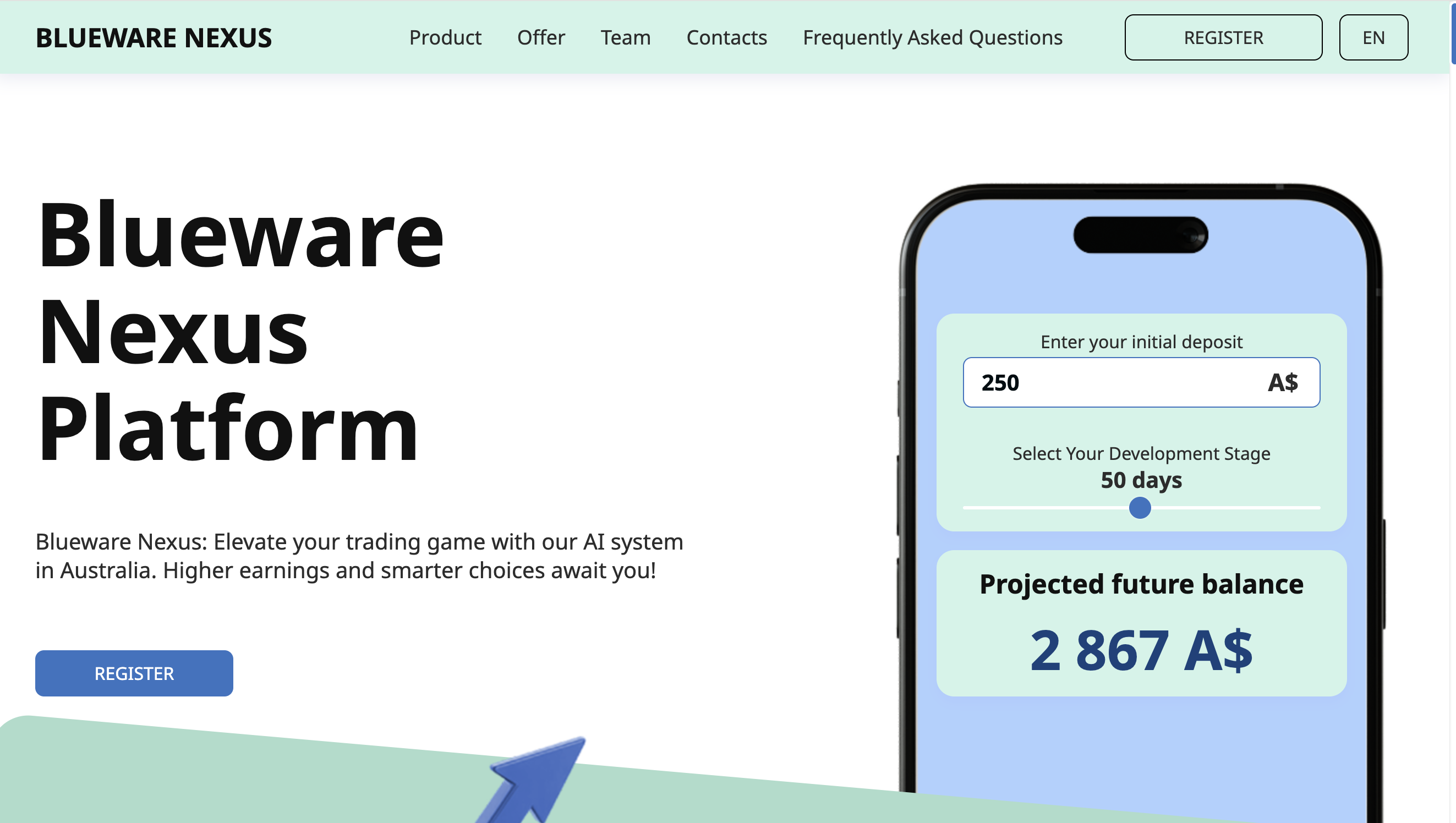
Blueware-Nexus.org has attracted attention due to questions surrounding its regulatory status, corporate transparency, and overall credibility. From a compliance perspective, these concerns deserve careful examination because regulatory oversight and corporate accountability remain fundamental pillars of investor protection.
This review evaluates Blueware-Nexus.org through the lens of compliance standards, focusing on due diligence, ownership transparency, licensing, governance, and investor safeguards.
Why Compliance Matters Before Investing
Financial markets rely on trust.
Whether an investor deposits $500 or $500,000, they should know:
- Who owns the company
- Which regulator supervises it
- Where client funds are held
- What legal protections exist
- How disputes are handled
Licensed financial firms must comply with strict rules involving capital requirements, anti-money laundering procedures, record keeping, client fund segregation, complaint handling, and regular audits.
When these elements cannot be verified, investors face considerably higher uncertainty.
Compliance is not simply paperwork—it forms the foundation of accountability.
Corporate Transparency Raises Important Questions
One of the first steps during any compliance review involves identifying the legal entity operating a platform.
Professional financial firms generally disclose:
- Registered company name
- Company registration number
- Physical office address
- Jurisdiction of incorporation
- Regulatory licence number
- Executive leadership
- Customer support information
In the case of Blueware-Nexus.org, publicly available information offers limited clarity regarding the operating company behind the platform. This lack of transparency makes it difficult for prospective investors to independently verify the firm’s legal standing or determine who ultimately controls the business.
Without clear ownership information, investors may struggle to answer basic questions such as:
- Who is responsible for safeguarding deposited funds?
- Which legal entity signs customer agreements?
- Which country’s laws govern disputes?
- Where are company assets located?
Transparent ownership is one of the strongest indicators of operational legitimacy.
Regulatory Status Deserves Careful Attention
Perhaps the most significant consideration during due diligence is regulatory authorization.
Legitimate investment firms generally hold licences issued by recognized financial authorities. These regulators establish rules designed to protect investors and monitor firms that provide financial services.
Publicly available information indicates that Blueware-Nexus.org has been associated with a warning from the Australian Securities and Investments Commission (ASIC), identifying the platform as an unregistered or unlicensed entity offering financial products or services.
Such regulatory notices are important because they signal that a platform may not have the authorization required to provide investment services within the relevant jurisdiction.
Investors should always verify licensing claims directly with the appropriate regulator before depositing funds.
Why Licensing Matters
Many first-time investors underestimate the importance of regulation.
A licensed investment company is generally required to follow rules covering:
- Client money protection
- Financial reporting
- Internal controls
- Risk management
- Complaint procedures
- Record retention
- Anti-money laundering compliance
Regulators also possess enforcement powers, including investigations, fines, licence suspensions, and other disciplinary actions.
Without regulatory oversight, these protections may not apply.
That does not automatically determine how every platform operates, but it significantly reduces the external accountability available to customers.
Due Diligence Should Go Beyond Marketing Claims
Modern investment websites often present polished interfaces, sophisticated dashboards, and promises of advanced trading technology.
However, compliance professionals evaluate much more than website appearance.
Key questions include:
- Can regulatory registration be verified?
- Is company ownership disclosed?
- Are terms and conditions complete?
- Are legal documents comprehensive?
- Are risk disclosures adequate?
- Is there independent oversight?
Marketing language alone cannot substitute for verifiable compliance information.
Investors should always seek independent confirmation rather than relying solely on promotional materials.
Ownership Transparency Supports Accountability
Knowing who owns a financial platform is essential.
Corporate transparency allows investors to:
- Verify company registration
- Review management history
- Assess business experience
- Identify controlling interests
- Confirm legal accountability
When ownership information is unavailable or difficult to verify, evaluating operational credibility becomes more challenging.
Clear ownership structures demonstrate that a company is prepared to operate openly within established legal frameworks.
Investor Protection Depends on Strong Governance
Investor protection extends beyond licensing.
Effective governance typically includes:
- Independent compliance oversight
- Internal audit functions
- Risk management policies
- Segregation of customer funds
- Executive accountability
- Conflict-of-interest management
These controls reduce operational risks and help ensure that firms meet regulatory obligations.
Where governance arrangements are not clearly disclosed, investors have fewer ways to assess how decisions are made and how customer interests are protected.
Website Information Should Be Easy to Verify
Professional financial institutions generally publish detailed legal documentation, including:
- Privacy policies
- Client agreements
- Risk disclosures
- Regulatory statements
- Corporate registrations
- Contact information
Every document should be internally consistent and independently verifiable.
Incomplete or vague disclosures can make it difficult for users to understand their legal rights and obligations.
Compliance reviews place considerable emphasis on documentation quality because transparency supports informed decision-making.
Risk Disclosures Are an Important Compliance Indicator
Investment products always involve risk.
Responsible financial firms explain those risks clearly rather than emphasizing potential returns alone.
Quality disclosures normally discuss:
- Market volatility
- Capital loss
- Leverage risks
- Liquidity issues
- Execution risks
- Regulatory limitations
Balanced communication reflects stronger compliance culture.
Investors should be cautious when promotional content significantly outweighs meaningful discussion of investment risks.
Regulatory Warnings Should Not Be Ignored
Financial regulators issue public warnings to help investors identify entities that may be operating without authorization.
These notices encourage individuals to verify licensing before engaging with investment providers.
The reported ASIC warning relating to Blueware-Nexus.org therefore represents a material due diligence consideration for anyone evaluating the platform.
Regulatory databases exist precisely to help investors make more informed decisions.
Checking these resources should become a routine step before opening any investment account.
Conducting Effective Due Diligence
Before selecting any online investment platform, investors should independently verify several critical areas:
Corporate Identity
- Registered business name
- Company registration records
- Corporate headquarters
- Management information
Regulatory Authorization
- Licence number
- Supervisory authority
- Regulatory status
- Public register verification
Legal Documentation
- Terms of service
- Privacy policy
- Risk disclosures
- Client agreement
Operational Transparency
- Contact information
- Customer support
- Fee schedules
- Withdrawal policies
Performing these checks helps reduce uncertainty and supports informed investment decisions.
Transparency Builds Long-Term Trust
Trust in financial services is earned through openness.
Investors should be able to independently verify nearly every significant claim made by an investment provider.
This includes:
- Licences
- Registrations
- Corporate identity
- Office locations
- Regulatory memberships
- Compliance policies
When independent verification becomes difficult, confidence naturally declines.
Transparent firms understand that informed customers strengthen long-term business relationships.
Final Assessment
From a compliance and governance perspective, Blueware-Nexus.org presents several issues that warrant careful scrutiny. Publicly available information indicates limited ownership transparency, difficulty verifying corporate details, and the existence of an ASIC warning concerning the platform’s regulatory status as an unregistered or unlicensed provider of financial services.
While every investment decision should be based on comprehensive independent research, core compliance principles remain consistent across the financial industry. Investors benefit most from dealing with firms that clearly disclose their ownership, operate under recognized regulatory supervision, publish comprehensive legal documentation, and maintain transparent governance practices.
Ultimately, due diligence is one of the most effective tools available to investors. Carefully verifying regulation, ownership, operational transparency, and investor protection measures before committing funds can help distinguish well-governed financial service providers from platforms that offer limited accountability or insufficient regulatory oversight.
-
Contact Bridgereclaim.com to Review Your Case
If you have lost money to blueware-nexus.org, it is important to act without delay. You can submit details of your experience to BRIDGERECLAIM.COM, a platform that assists individuals who have been affected by fraudulent online trading activity. Taking prompt action may improve the likelihood of addressing the situation and pursuing accountability for those responsible.
Unregulated brokers such as blueware-nexus.org continue to target unsuspecting investors. Staying informed, avoiding platforms that lack proper oversight, and alerting the appropriate channels can help protect both yourself and others from financial misconduct.