FirstEdge Capital Transparency Assessment
Introduction
Conducting due diligence before engaging with any online investment platform is one of the most important steps investors can take to protect their capital. While many platforms present polished websites, attractive investment opportunities, and ambitious claims about returns, a professional appearance alone should never be considered evidence of legitimacy or regulatory compliance.
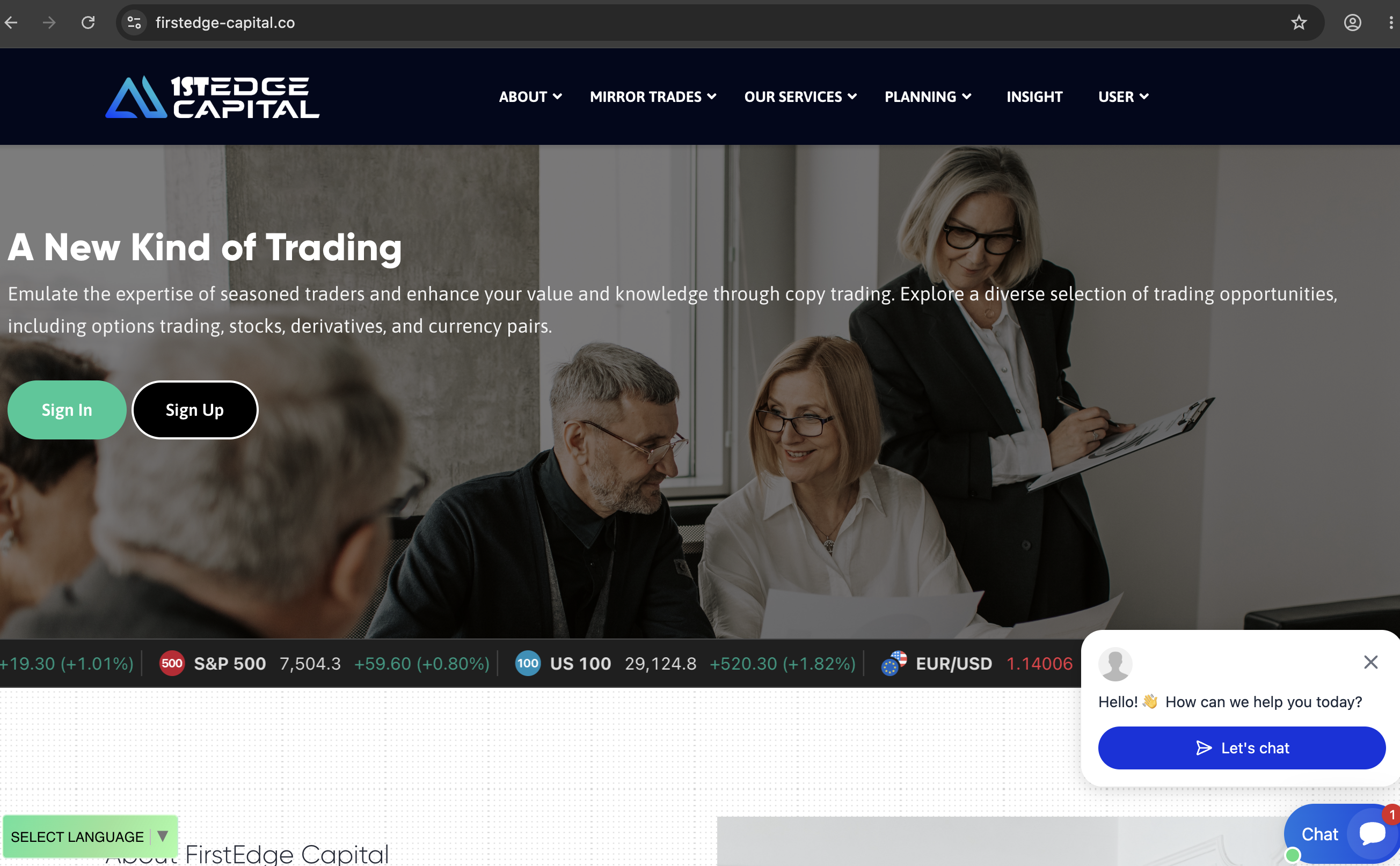
This review examines FirstEdge Capital (firstedge-capital.com) from the perspective of a compliance analyst. Rather than evaluating investment performance or marketing claims, the focus is on the factors that institutional investors, compliance departments, and financial professionals typically assess before considering a financial services provider.
The analysis covers regulatory status, corporate transparency, ownership disclosure, licensing, operational accountability, and investor protection mechanisms. These areas collectively help determine whether a platform demonstrates the characteristics expected of a regulated financial service provider.
Why Due Diligence Matters
Financial regulation exists to protect investors by ensuring that firms offering investment services meet minimum standards relating to capital adequacy, governance, transparency, and customer protection.
When evaluating any online investment platform, compliance professionals generally seek answers to several fundamental questions:
- Is the company licensed by a recognized financial regulator?
- Is ownership publicly disclosed?
- Can the legal entity operating the platform be independently verified?
- Are client protection policies clearly documented?
- Does the platform provide transparent regulatory information?
- Are corporate disclosures complete and independently verifiable?
If clear answers cannot be obtained, the overall risk profile increases regardless of the quality of the website or promotional material.
Regulatory Status
One of the primary considerations during any compliance review is whether a financial services provider operates under the authorization of a recognized financial regulator.
Publicly available information indicates that FirstEdge Capital has been referenced in regulatory warning databases relating to unauthorized or unlicensed financial services, including warnings associated with the Australian Securities and Investments Commission (ASIC). Independent industry publications have also referenced these regulatory notices and advise investors to verify licensing independently before engaging with the platform.
It is important to distinguish between being licensed and merely claiming to provide investment services.
A regulated investment firm generally publishes:
- License numbers
- Regulatory registration details
- Supervisory authority
- Legal entity name
- Registered business address
- Compliance documentation
Without independently verifiable regulatory authorization, investors cannot easily determine which legal framework governs their relationship with the platform.
Transparency of Corporate Ownership
Corporate transparency is another cornerstone of compliance.
Professional investment firms normally disclose information regarding:
- Company ownership
- Directors
- Executive management
- Corporate registration
- Registered office
- Jurisdiction of incorporation
In the case of FirstEdge Capital, publicly available information provides limited independently verifiable information regarding the individuals or legal entities responsible for operating the platform. Multiple independent reviews note that ownership information is not readily verifiable through publicly available disclosures.
This lack of transparency creates challenges for investors attempting to perform proper due diligence.
When ownership structures cannot be independently confirmed, it becomes more difficult to evaluate:
- Corporate accountability
- Governance standards
- Financial responsibility
- Regulatory oversight
- Legal recourse
Transparency is not simply a best practice—it is an essential element of investor confidence.
Website Transparency
Another area frequently assessed during compliance reviews is website transparency.
Legitimate financial institutions generally publish detailed information covering:
- Legal terms
- Risk disclosures
- Privacy policies
- Regulatory disclosures
- Client agreements
- Complaints procedures
- Corporate contact information
Although FirstEdge Capital maintains an online presence, several independent website reputation services note that limited corporate information and restricted ownership transparency reduce the ability to independently verify the firm’s operational credentials.
Compliance professionals generally expect financial service providers to maintain comprehensive documentation that allows prospective clients to verify key operational information without ambiguity.
Licensing Verification
One of the simplest but most effective due diligence exercises involves verifying regulatory licensing directly with the relevant financial authority.
Licensed financial firms typically appear within searchable public registers maintained by regulators.
These registers often include:
- Company name
- Trading names
- License number
- Regulatory permissions
- Current authorization status
- Registered office
- Approved activities
Where no independently verifiable authorization can be established, additional caution is generally warranted before transferring funds or entering into investment agreements.
Public reporting concerning FirstEdge Capital indicates that regulatory concerns have been raised regarding authorization status in at least one jurisdiction.
Importance of Corporate Accountability
Corporate accountability extends beyond publishing a business address.
Compliance reviews typically examine whether a company demonstrates:
- Clear management structure
- Public leadership
- Corporate governance
- Independent oversight
- Regulatory reporting
- Financial accountability
Well-regulated firms usually provide sufficient corporate information to allow independent verification through official company registries.
Limited public disclosure regarding company leadership or ownership can make it more difficult to assess operational accountability.
This does not automatically determine the quality of a firm’s services, but it does reduce transparency—a factor compliance professionals consider carefully during risk assessments.
Investor Protection Considerations
Investor protection forms the foundation of modern financial regulation.
Regulated investment firms commonly operate under rules covering:
- Client money segregation
- Conflict of interest management
- Risk disclosures
- Complaint handling
- Financial reporting
- Anti-money laundering compliance
- Know Your Customer (KYC) procedures
Regulatory supervision helps ensure these requirements are monitored through periodic examinations and ongoing oversight.
Where regulatory authorization cannot be independently confirmed, investors may have less visibility into whether comparable protections apply.
For compliance professionals, investor protection is evaluated based upon documented policies, regulatory supervision, and independently verifiable governance—not solely on marketing statements.
Domain and Operational Observations
Independent cybersecurity and website reputation services have assigned elevated risk scores to the FirstEdge Capital domain based on multiple technical and transparency indicators, including limited ownership visibility and external warning signals. These assessments are automated and should not be treated as definitive findings, but they may provide additional context during a broader due diligence review.
Technical indicators alone cannot establish whether a business is compliant or non-compliant.
However, they often encourage further investigation into:
- Domain ownership
- Website history
- Contact information
- Operational consistency
- Public reputation
Professional due diligence combines these observations with regulatory verification and corporate disclosures rather than relying on any single indicator.
Public Reputation
Public reviews should never serve as the sole basis for investment decisions.
Online review platforms may contain both genuine customer experiences and unverified submissions.
Nevertheless, consistent complaints relating to communication, transparency, or operational practices may warrant additional investigation.
FirstEdge Capital currently has a limited number of publicly available online reviews, meaning there is insufficient volume to establish a statistically meaningful reputation profile. As with any online platform, such reviews should be considered alongside objective evidence such as regulatory records and corporate disclosures.
Red Flags Identified During Due Diligence
Based on publicly available information, several factors merit closer examination during a compliance review:
- Limited independently verifiable ownership information.
- Public references to regulatory warnings regarding authorization status.
- Absence of easily verifiable licensing details from major financial regulators.
- Limited corporate transparency.
- Reduced visibility into governance and management.
- Independent cybersecurity services assigning elevated risk indicators to the platform’s domain.
None of these observations alone conclusively determine the legitimacy of a financial services provider. However, taken collectively, they represent factors that compliance professionals would normally investigate further before approving a business relationship.
Best Practices for Evaluating Investment Platforms
Regardless of the platform under consideration, investors should adopt a structured due diligence process.
Key verification steps include:
- Confirm regulatory authorization through official regulator registers.
- Verify the legal entity operating the platform.
- Review corporate ownership information.
- Examine publicly available financial disclosures where applicable.
- Assess governance and management transparency.
- Read client agreements and risk disclosures carefully.
- Verify that contact information and corporate addresses are independently traceable.
These practices form part of standard compliance procedures across the financial services industry and help investors make informed decisions based on objective evidence rather than promotional claims.
Final Assessment
From a compliance perspective, transparency and regulation remain two of the strongest indicators of institutional credibility.
Based on publicly available information reviewed for this assessment, FirstEdge Capital presents several areas that warrant enhanced due diligence. Public sources reference regulatory warnings regarding authorization status, while independent analyses point to limited corporate transparency and ownership disclosure. Additionally, readily verifiable licensing information from recognized financial regulators is not apparent in the available public record.
While the presence of these factors does not, by itself, determine the legality or operational integrity of a business, they are significant considerations within any professional compliance review. Investors and financial professionals should base their evaluations on independently verifiable regulatory records, corporate disclosures, and documented governance practices rather than relying solely on website presentation or promotional material.
A disciplined due diligence process—centered on transparency, regulatory oversight, corporate accountability, and investor protection—remains the most reliable framework for assessing online investment platforms in an increasingly complex digital financial environment.
-
Contact Bridgereclaim.com to Review Your Case
If you have lost money to firstedge-capital.com, it is important to act without delay. You can submit details of your experience to BRIDGERECLAIM.COM, a platform that assists individuals who have been affected by fraudulent online trading activity. Taking prompt action may improve the likelihood of addressing the situation and pursuing accountability for those responsible.
Unregulated brokers such as firstedge-capital.com continue to target unsuspecting investors. Staying informed, avoiding platforms that lack proper oversight, and alerting the appropriate channels can help protect both yourself and others from financial misconduct.